
trademagic guides
Do technical indicators actually work?
A moving average is the past, averaged. An oscillator is the past, rescaled. Every indicator is a transformation of price that already happened, and that is precisely why they feel so convincing and test so poorly.
Start with a free trial. No credit card required.
The information argument
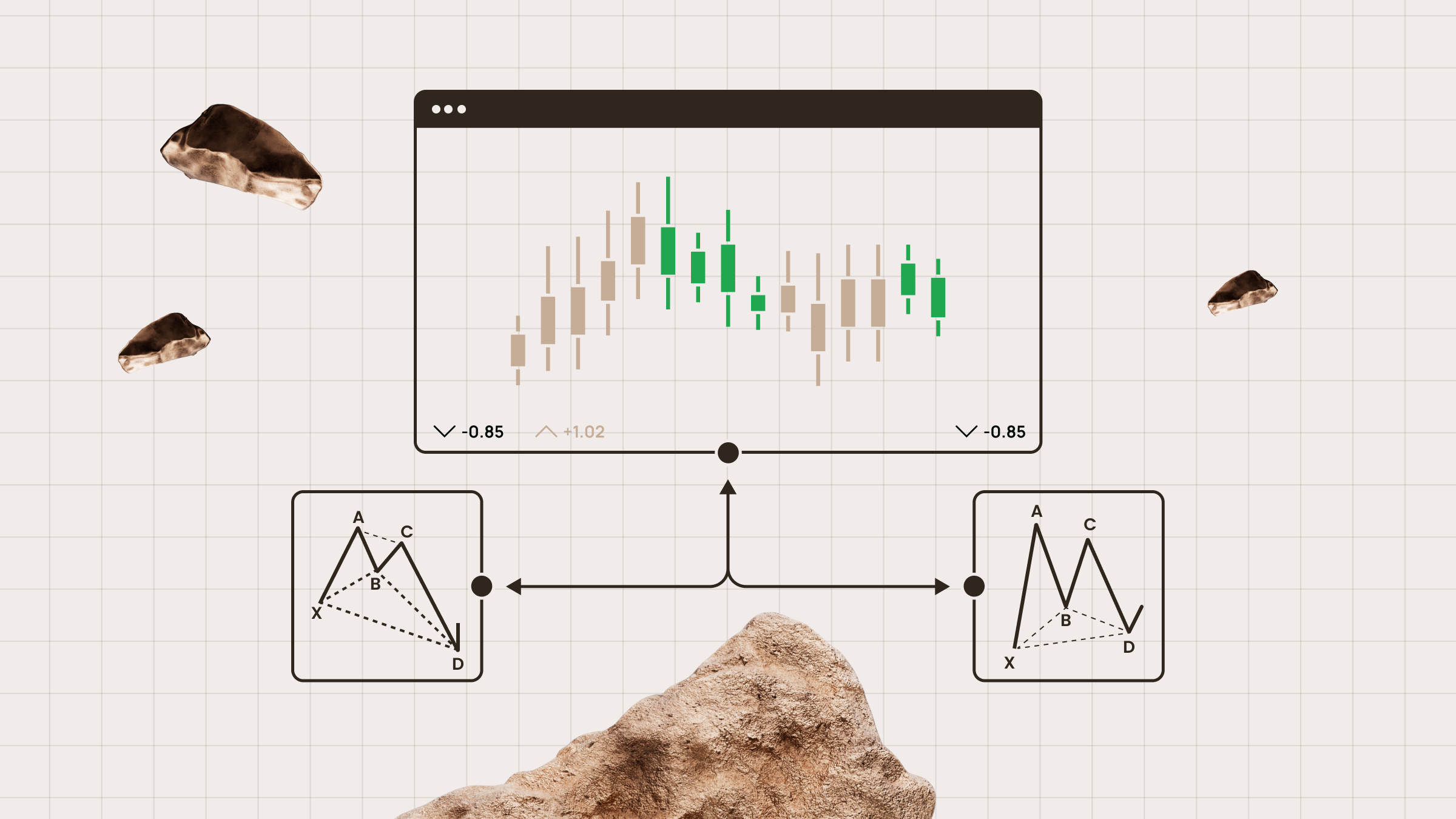
Every indicator is derived from one input: historical price (sometimes volume). It contains no information that price itself does not already contain; it just re-plots the past in a shape that invites extrapolation. The events that will move EURUSD over the next four hours, a surprise in the calendar, a positioning squeeze, a shift in real flow, are simply not in that input. You cannot compute tomorrow from a rearrangement of yesterday.
Three structural failures
- Lag. Smoothing means arriving late by construction. The crossover confirms a move after the cheap part of it has been given away.
- Crowding. The popular levels everyone watches become liquidity pools where resting stops get run. When an entry rule is public and free, its exits are a target.
- Overfitting on demand. Two tunable parameters against one price history will always yield settings that loved the past. That is a property of curve fitting, not of markets, and it is why indicator systems backtest brilliantly and bleed live. Our backtesting essay covers the mechanism.
What moves FX instead
Currencies respond to observable, exogenous drivers: real order flow crossing the tape, macro releases and the surprise between print and expectation, positioning from COT reports, open interest, futures and options structure at CME, and carry from rate differentials. None of this is on a chart, all of it is in data, and data can be modelled, tested, and certified. That is the entire design premise of trademagic's specialist FX models: more than 900 market metrics built from driver data, zero indicators, and a certification bar every model must pass before its first live signal.
# What a driver-based signal looks like: no RSI, no crossover, just the
# quantified output of models trained on flow, positioning and macro state.
curl -s "https://trademagic.ai/api/ext/v1/signals" \
  -H "Authorization: Bearer tp_live_YOUR_KEY"

# {"signals":[{"pair":"GBPUSD","side":"sell","entry":"1.27510000",
#   "sl":"1.27890000","tp":"1.26740000","rr":"2.0300","ev":"0.3800",
#   "eta":"2-4h","status":"fresh", ...}], "window_days":14}
The honest caveat
Indicators are not evil; they are descriptive. Using a volatility measure to place a sensible stop is arithmetic and perfectly fine. The failure is promotion: treating a description of the past as a prediction of the future. Demand inputs that carry information about what comes next, and demand the testing discipline to prove it. Then verify on a live feed, which is what the trial is for.
Start with a free trial
Create an account and your API key is minutes away.
Frequently asked questions
If indicators don't work, why does every platform ship them?
Because they are free to compute, easy to teach, and they make charts feel legible. Brokers earn from activity, educators earn from courses, and indicators generate both. None of that requires them to predict anything.
Is price action just technical analysis by another name?
Mostly yes. Reading candles and patterns is still inferring the future from the shape of past price. The information that moves the next hour of EURUSD sits in flow, positioning, and macro state, which no candle shape encodes.
Do professional desks use indicators at all?
As descriptive statistics, occasionally: a volatility measure to scale a stop is arithmetic, not prophecy. As a source of directional edge, no. Desk models are built on order flow, positioning, and macro data, which is the approach our models industrialise.
Can I layer my own indicator filters on trademagic's signals?
Technically yes, the API hands you everything and your rules are your own. Be aware of the trade-off: the models' certified statistics assume systematic execution, and every discretionary filter moves your results away from the published numbers.
Start with a free trial
Create an account and your API key is minutes away.